
What a Home Can Quietly Take Off Your Plate
Smart home features usually get sold to you as convenience. A lock you don't need a key for. A thermostat you can adjust without getting off the couch. A little peace of mind if a pipe springs a leak while you're away. Even a fully furnished home gets talked about as a nice-to-have, one less errand before move-in day.
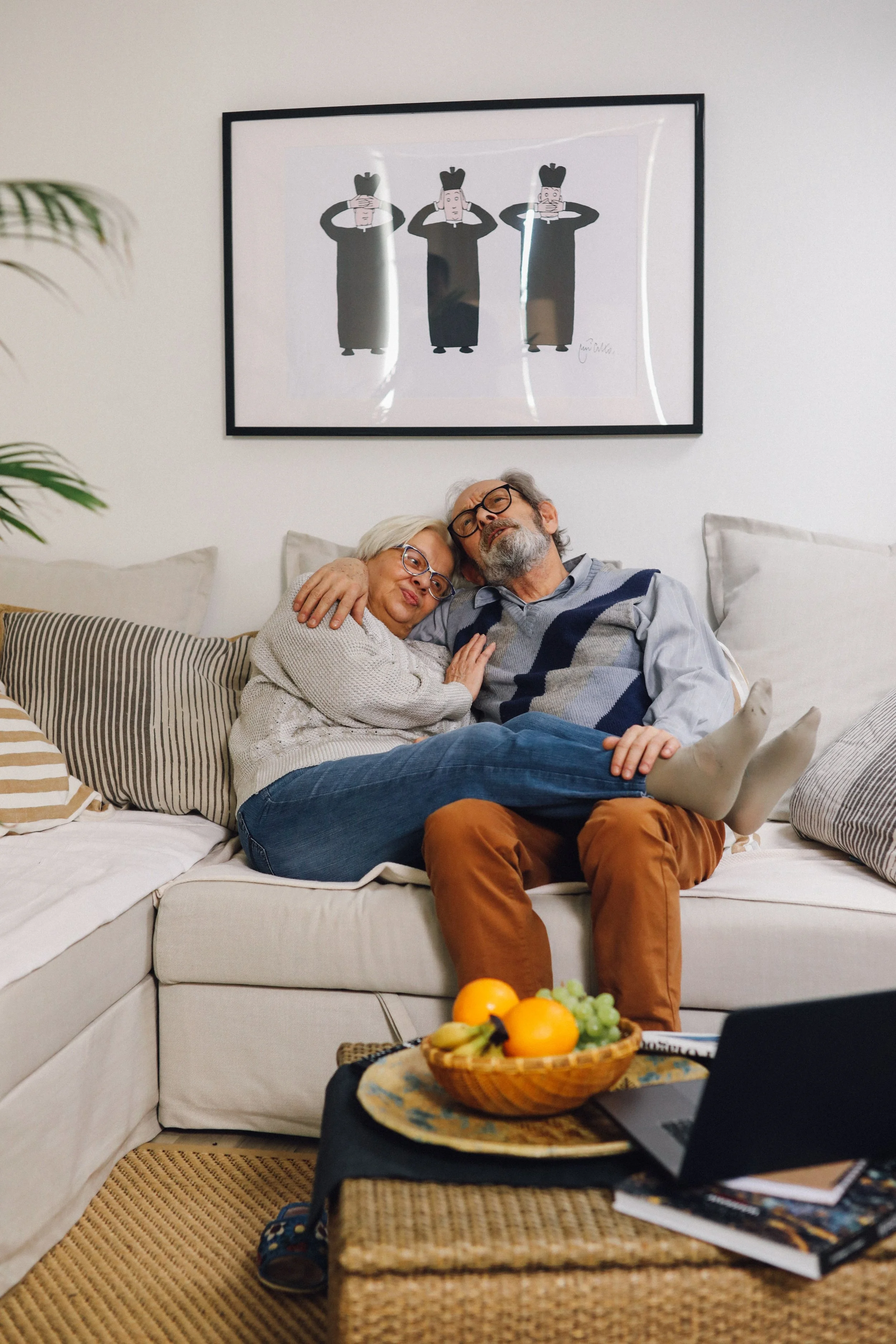
Look closer, and the same features are quietly solving a much bigger problem: taking things off the plate of whoever's living there, whatever's already asking too much of their attention. Older adults. A caregiver stretched thin. A grad student who hasn't looked up from a dissertation in weeks. Someone deep in exam prep with nothing left to give the small stuff. Anyone whose relationship to their own home is more complicated than a standard listing photo suggests.
The Modern Touches You Didn't Realize Were Doing Double Duty
Every E42 property comes with a handful of features we chose mostly for ease and peace of mind. It turns out they're also some of the most foundational tools in how homes are being rethought for independence, accessibility, and a little relief for anyone whose bandwidth is already spoken for.
Smart locks. No fumbling for keys, no hidden spare under a flowerpot, no lock that requires a firm grip or a twisting motion that isn't always easy for everyone. A smart lock means family, a support person, or a caregiver can be given temporary access without a physical key ever changing hands. It also means a guest who's walked out the door mid-thought, three hours into a study session, doesn't have to remember where they put anything.
Smart thermostats. Consistent, easy-to-read, easy-to-adjust temperature control, without needing to bend down, squint at a dial, or physically reach a wall panel. Comfort that doesn't ask anything physical of you to maintain, one less thing a caregiver has to manage for someone else, and one less interruption for someone who just wants to stay in the chair and keep reading.
Water leak detectors and automatic shut-off valves. A running faucet, a slow pipe failure, a dishwasher hose that finally gives out: these are the kinds of problems that used to go unnoticed until they became expensive, or worse, dangerous. A shut-off valve catches it before anyone has to notice, which matters most for exactly the households where noticing early isn't always possible.
Fully furnished, from day one. Furnishing a home, or refurnishing one to fit new needs, is its own quiet burden: sourcing furniture, arranging delivery, figuring out what actually works for the person who'll be living there. Every E42 home arrives ready. For a family managing a move or a transition in care, or a student who needs to unpack a laptop and get to work the same afternoon they arrive, one less thing to source and set up is its own kind of relief.
None of these were installed with a specific person in mind. We added them because they make a home easier to live in, full stop. That same design goal is driving a lot of serious thinking right now about what homes need to look like for older adults, people with disabilities, the families and caregivers supporting them, and anyone else running on borrowed attention.
The Peace of Mind in a Short Walk
There's a version of this same relief that has nothing to do with what's inside the house at all. It's the distance between the front door and everything a person actually needs.
A short, level walk to a grocery store, a pharmacy, a doctor's office, or simply another person, matters more than scenery ever will once driving becomes harder to count on. A home a few flat blocks from the basics means fewer errands depend on someone else being available to drive, and fewer emergencies turn into a scramble to arrange transportation on short notice. For a caregiver, that distance is its own kind of peace of mind: knowing that if something is needed today, it doesn't require a car, a schedule, and a favor from someone else's day.
This is part of why we look as closely at a community as we do at a property. Walkability isn't just a lifestyle feature. For the households we're describing here, it's often the difference between independence and a growing list of things that quietly require help.
Why This Matters Beyond the Guest Experience
Most conversations about accessible or well-designed homes miss something important: the goal usually isn't independence from other people, or other demands, entirely. It's reducing how much has to be carried by any one person, especially someone who's already carrying a lot.
Caregivers absorb an enormous amount of quiet, ongoing labor: noticing things before they become emergencies, managing routines, being the fallback for every small task the home doesn't handle on its own. A dissertation, a licensing exam, a board certification, asks for that same kind of relentless attention, just pointed somewhere else. A home that does some of its own noticing, an automatic shut-off instead of a flooded basement, a lock that doesn't require anyone to be physically present to grant access, gives that person back a little bandwidth. A neighborhood that keeps daily needs within walking distance does the same thing, quietly, every day.
That reframes what "well-designed" actually means. It includes the person living in the home, and everything else that person is already carrying.
Homes That Adjust, Instead of Asking You To
We've written before about what makes a place feel like it's truly built for you, somewhere that holds you rather than somewhere you have to work around. That idea isn't limited to any one life stage or circumstance. It applies just as much to a person managing a disability, a family caring for a loved one, or someone whose calendar is entirely spoken for by an exam date that isn't moving.
A well-designed home doesn't require the people in it to constantly adjust to its limitations. Temperature you can control without effort. Entry that doesn't depend on remembering a key. A short walk to what's actually needed, instead of a drive that depends on someone else's availability. A home that notices a problem before it becomes a crisis, so nobody has to notice everything themselves.
This isn't a service we're announcing today. It's the direction we're already building in, and paying closer attention to as we think about who our homes serve, and what else they're already carrying.
A good home asks little of the people who have the least left to give it.